Oct 10, 2026 · 20 min
Impel review. What the AI platform for car dealers does and what to check before you buy
A review of Impel based on its website, demo chats, case studies and dealer opinions. Five modules, what is confirmed, what is a company claim, and what to ask before you sign.
Impel does not sell a chatbot. It sells an "operating system" for the whole customer path, from the first online lead to the third service visit. It is the loudest AI vendor for car dealers in the US.
It raised more than 130 million dollars. It says it has 8,000 clients. And it has a 36% rating on the main dealer forum.
I did not test Impel inside a client account. I have no access to one. I studied the website, demo chats, case studies, videos, press and dealer opinions on a public forum. This review shows what you can see from the outside. It also shows what you must check yourself before you sign.
In short
- Impel has five modules. Sales AI works leads. Service AI brings customers back to service. Chat AI answers on the website. Voice AI answers calls to the service department. Marketing AI and Merchandising AI send campaigns and improve vehicle pages.
- The main promise is simple. One owner of the customer and the customer data, not four vendors.
- Every growth number on the site is a company claim. I found no independent measurement.
- Dealers on DealerRefresh say the product is generic and needs a lot of work to start. They praise the vendor's sales team more than the product.
- The website shows no price. One dealer on a forum estimated 1,500 to 3,000 dollars a month for add-ons like this. That is an estimate, not a price list.
- You can copy the process idea without buying anything. I list six steps near the end.
Who is behind it
The story starts in 2012. The company was called SpinCar then. It made 3D walkarounds of cars for dealer websites. In 2022 it became Impel.
The founders are Devin Daly (CEO) and Michael Quigley. The head office is in Syracuse, New York. CBT News gives these facts.
Impel's own website tells a different start. It says the company began in 2014 and has "12 years" of history. The gap is small. But it shows that the company chooses its own start date.
Now the money. The company raised more than 130 million dollars. The main round was 104 million in January 2023. Silversmith Capital Partners led it. Wavecrest Growth Partners took part.
In December 2025 the fund FM Capital bought a share on the secondary market. The amount is not public. The press release says the fund gives access to 56 dealer groups.
Impel also grew by buying other companies. It bought Pulsar AI from Tbilisi in 2021 and CarLabs.ai in 2022. In July 2024 it bought the Outsell platform for more than 100 million dollars. Outsell gave Impel customer databases and marketing tools. This is how Marketing AI joined the set.
The site lists numbers about its size. 8,000+ clients, 51 countries, 100+ connected systems, and 11.4 billion dollars of sales and service revenue "influenced" by its AI. I treat all of this as company claims. You cannot check these numbers from outside. I also did not find the number of employees.
Impel sells an "operating system" of five modules
The site headline says "AI for Automotive". The subheading promises "the auto industry's most advanced AI Operating System". The target buyers are dealer groups and car makers. The promise is one platform for the full customer cycle instead of a set of vendors.
There are five modules. Next to them sits the AI Command Center. It is a work list for staff. The site shows it on the Voice AI page, so I describe it there.
Sales AI works the lead, it does not only answer it
Sales AI answers an online lead, keeps the talk going by email and SMS, and books a visit. The company stresses the word "agentic". Its logic is this.
A normal bot answers a lead. An agent works the lead. It picks the time and the channel and adjusts the tone.
It also looks at the lead source. A lead from a car maker site, a marketplace and a digital retail form get different message chains.
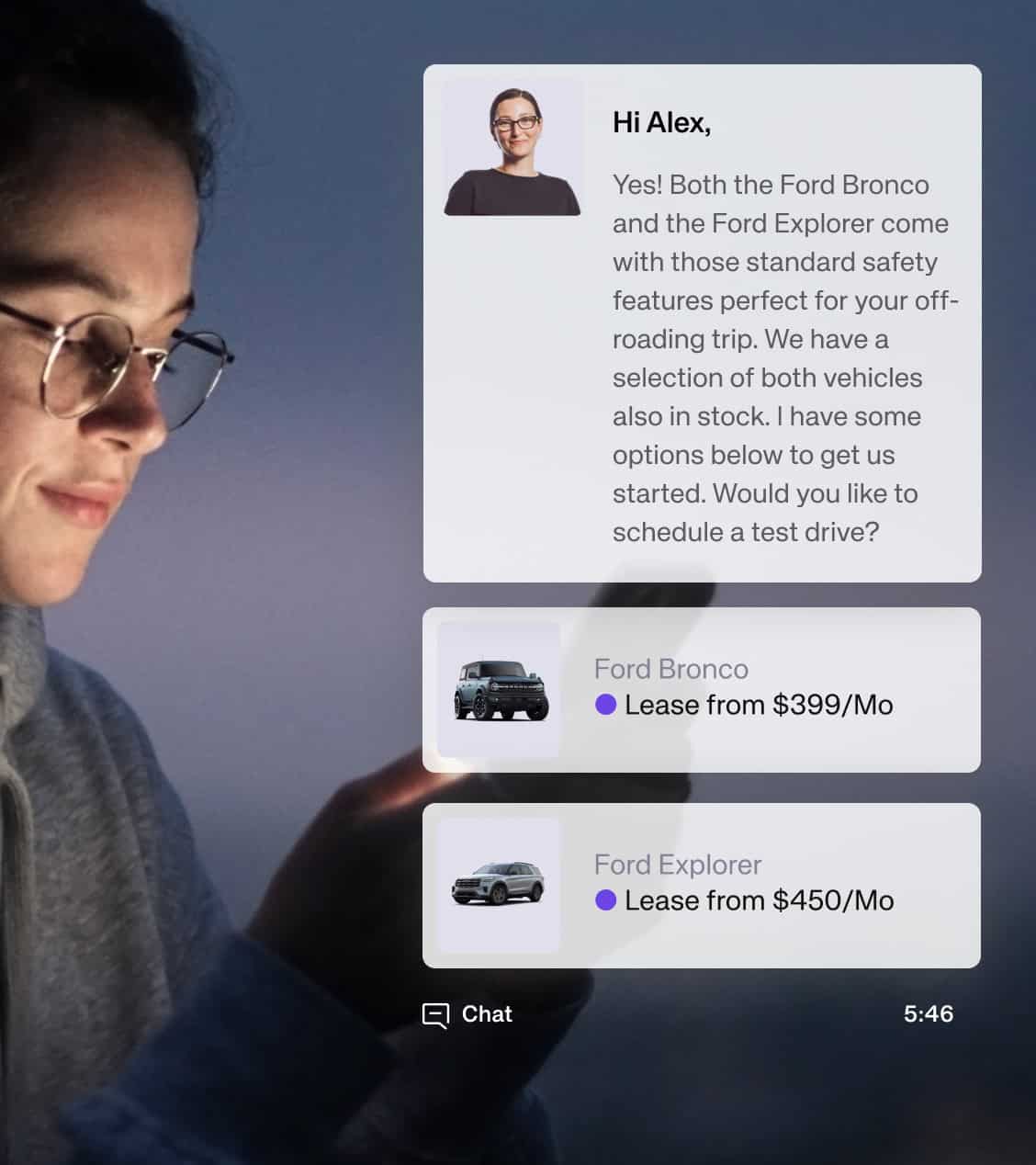
The picture below shows a typical case. A buyer built a Toyota Tundra on the maker's website and left contact details. The AI names the exact trim and color. It says a near match is in stock and mentions the current 2.9% financing offer.
It offers two time slots. The customer picks one. At the end the system writes the appointment into the CRM and notifies the sales team.
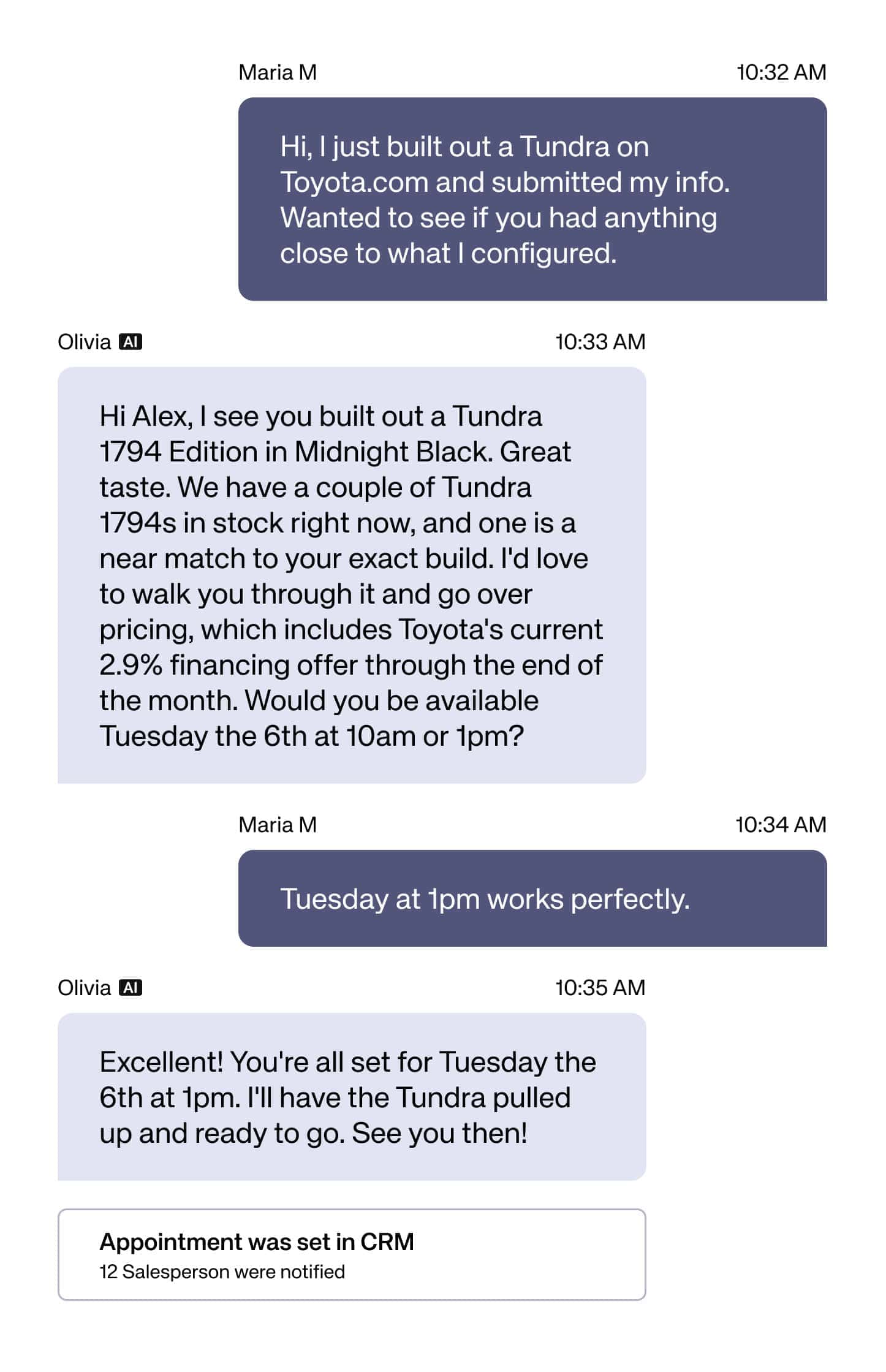
The dialog is clean. But it is an illustration on the site, not a recording of a real chat. It has a small slip that shows it was built for marketing. The customer is named "Maria M", and the AI says "Hi Alex".
I do not draw conclusions about the product from this. I draw one about the material. A demo shows the best case, chosen by marketing.
The page claims these results. Appointment set rate up 33%. Lead close rate up 26%. BDC cost per car sold down 33%. 2.5 times more leads per rep.
These are Impel's own numbers. The company also says the "psychological intelligence" of the AI is trained on more than 100 million automotive conversations. The page does not explain how that training changes a dealer's result.
The dealer sets up the AI persona, the number and order of touches, the channels and the escalation rules. This matters, and I come back to it in the questions before you sign. A "knowledge bank" sits next to it. The dealer puts loan terms, offers, warranties and store rules there. Sales AI takes its answers from it.
What is not clear? How much work the setup needs. Who writes the knowledge bank. What happens when the AI gives a wrong price.
The page says "great out of the box, even better when it's yours". That is a good sales line. It is not a guarantee.
Hand-off to a sales rep and a video for the first reply
The most useful part of Sales AI for a practitioner is the hand-off to a human. The AI prepares a brief for the rep. It holds the full conversation, the customer's intent and mood, the car of interest and a next step.
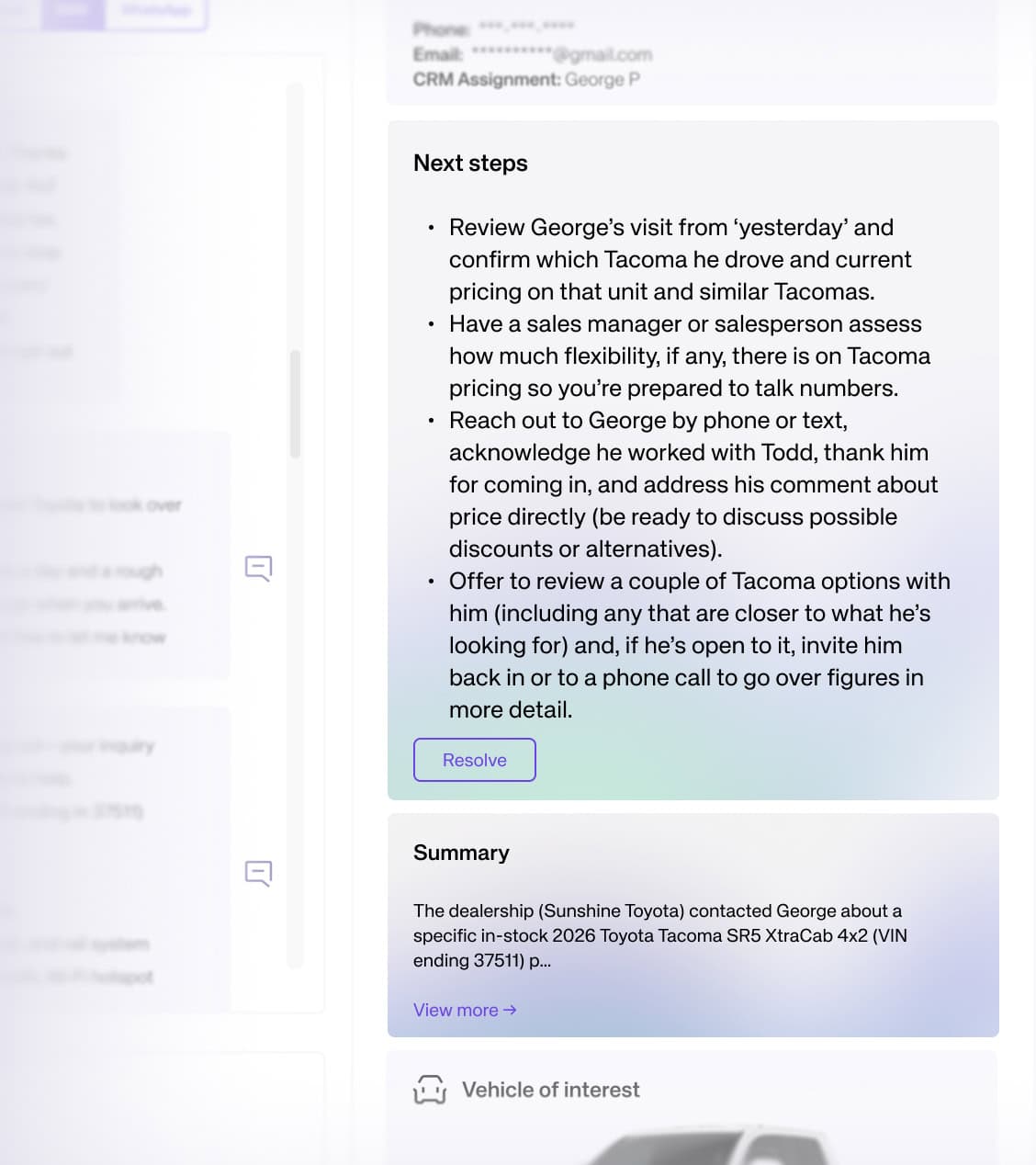
This is close to how a good BDC should work. The rep joins the talk prepared. The picture shows a ready list of steps. Whether you get such a brief in your CRM, or only next to it, depends on the integration. That is question number one for any demo.
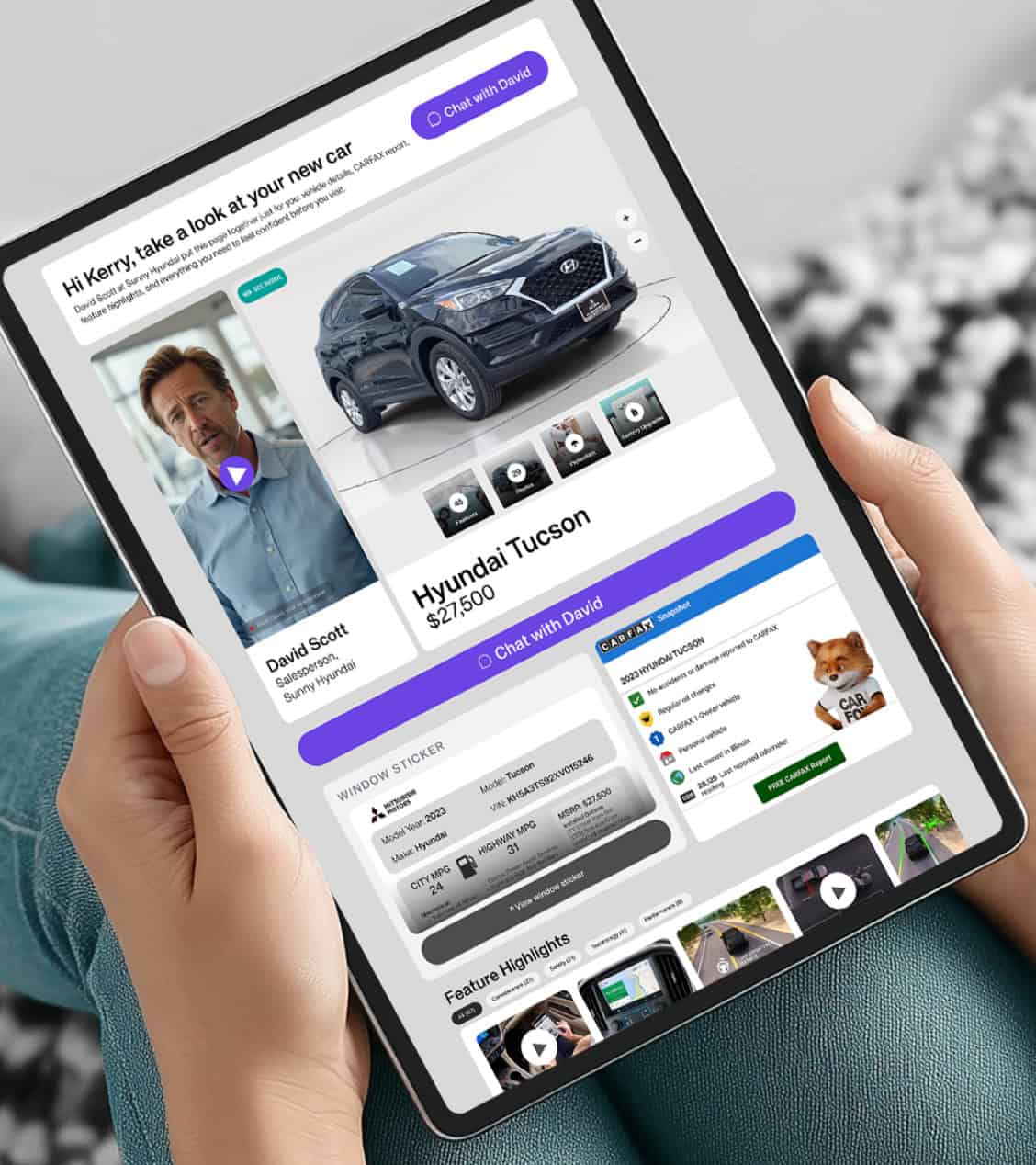
Another product sits next to it. VinVision AI builds a video with an AI avatar of the sales rep for the first reply. It also builds a personal page for the customer. The page holds the car listing, a Carfax report, the window sticker, a 360 view and a payment calculator.
The company shows numbers. Engagement +47%, gross per unit +20%, sales volume +15%, lead conversion +10%. The page gives no source for them. For me they are company claims without a method.
Service AI and Voice AI work the service lane
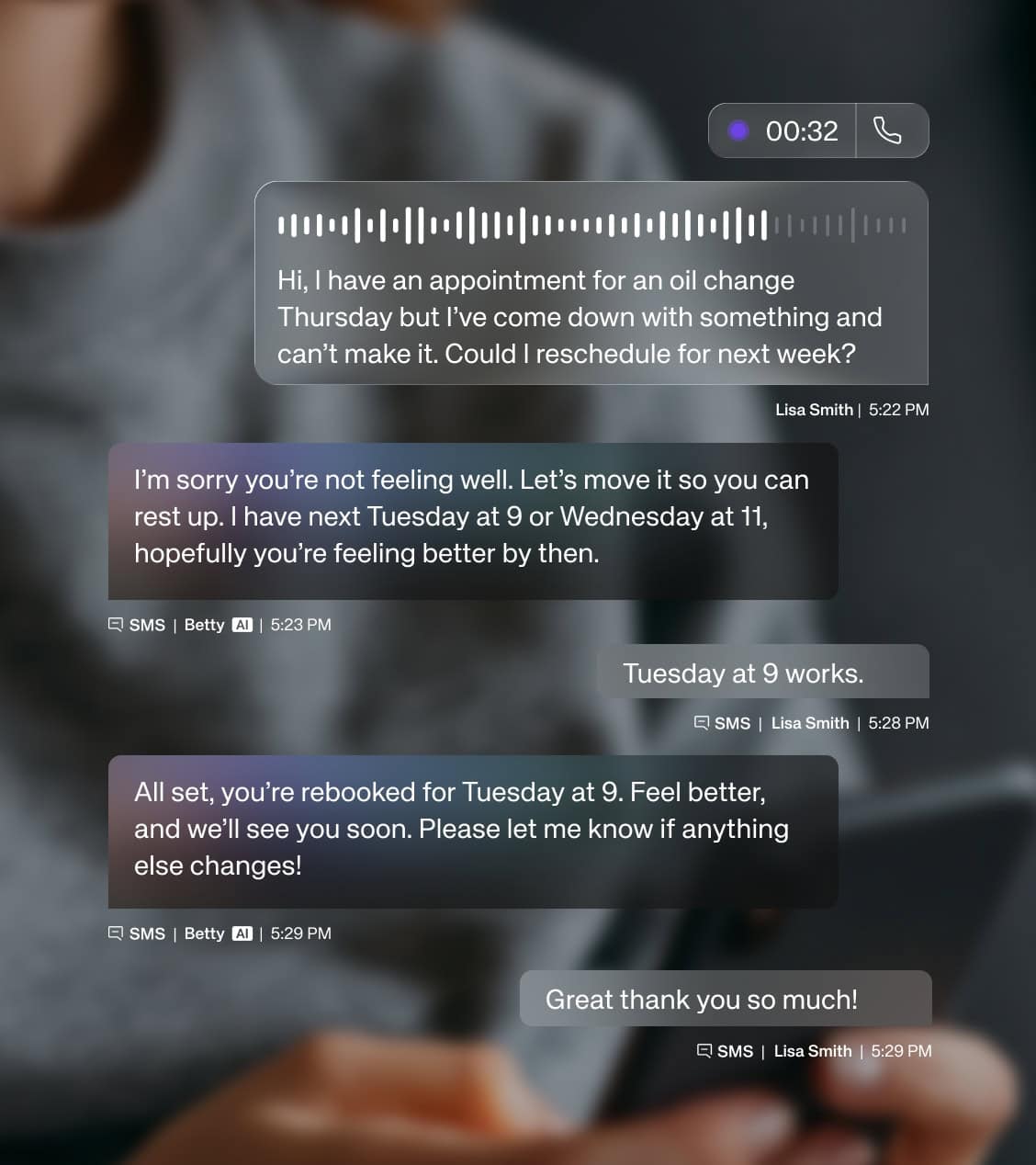
Service AI works with the service base. It reads records from the DMS. It looks at the VIN, the service history and the maker's service intervals. Then it writes to the customer by email and SMS, and sometimes by paper mail. It books the visit into the service calendar inside the conversation.
The site describes a chain of touches. A check-in 30 days after purchase, the first service, the next service, an expiring warranty and a declined repair.
The company's thesis is simple. The money is in the service customer base. The site quotes Cox Automotive. 74% of buyers whose car is serviced at the selling dealer are likely to return for the next car.
It also quotes "industry estimates". 7 out of 10 buyers service their car somewhere else. For an average dealer this means more than 625,000 dollars lost each year. The second number has no real source on the page.
Now calls. Voice AI is described as a digital voice assistant for the service department. It answers at once.
It answers simple questions about hours and warranty from the knowledge bank. It books service visits. It passes the call to the right person or puts a task into a work list.
If a call drops, the AI sends an SMS and finishes the booking by text. Staff see open cases in the AI Command Center. Each case shows the waiting time, a short summary and a next step.
The page has a missed-call calculator. You enter your calls per month and your average repair order.
It shows the revenue you lose. The default assumptions are preset. 36% of calls go to service. 40% of them go unanswered. 60% of voicemails never get a call back.
Car Wars reports give a part of these numbers. The page itself labels the rest as "Impel estimates". The calculator is a good way to measure your own gap. But treat the result as an estimate.
One difference from my older notes. A dealer on the forum wrote in 2025 that voice for sales was promised by the end of the year. Today the site describes Voice AI only for the service line. I do not see voice for sales on the page.
Chat AI answers on the website and knows your stock
Chat AI is a website chat on a generative model. The company says the model is trained on more than 200 million shopper conversations. The chat can show car cards from your stock and maker content inside the dialog. It separates sales from service and sends the request to the right department. The dealer gets an alert when a human must join.
The company's numbers are 20% fewer abandoned chats, 20% more appointments and twice the engagement of captured leads. The page has three dealer quotes, from Barnes Crossing, Fred Martin and Kia and Volvo of Falls Church. These are chosen quotes on a vendor site. The Fred Martin quote is modest but honest. The BDC manager no longer watches the chat all day and does other work.
Marketing AI and Merchandising AI work with the database and the vehicle page
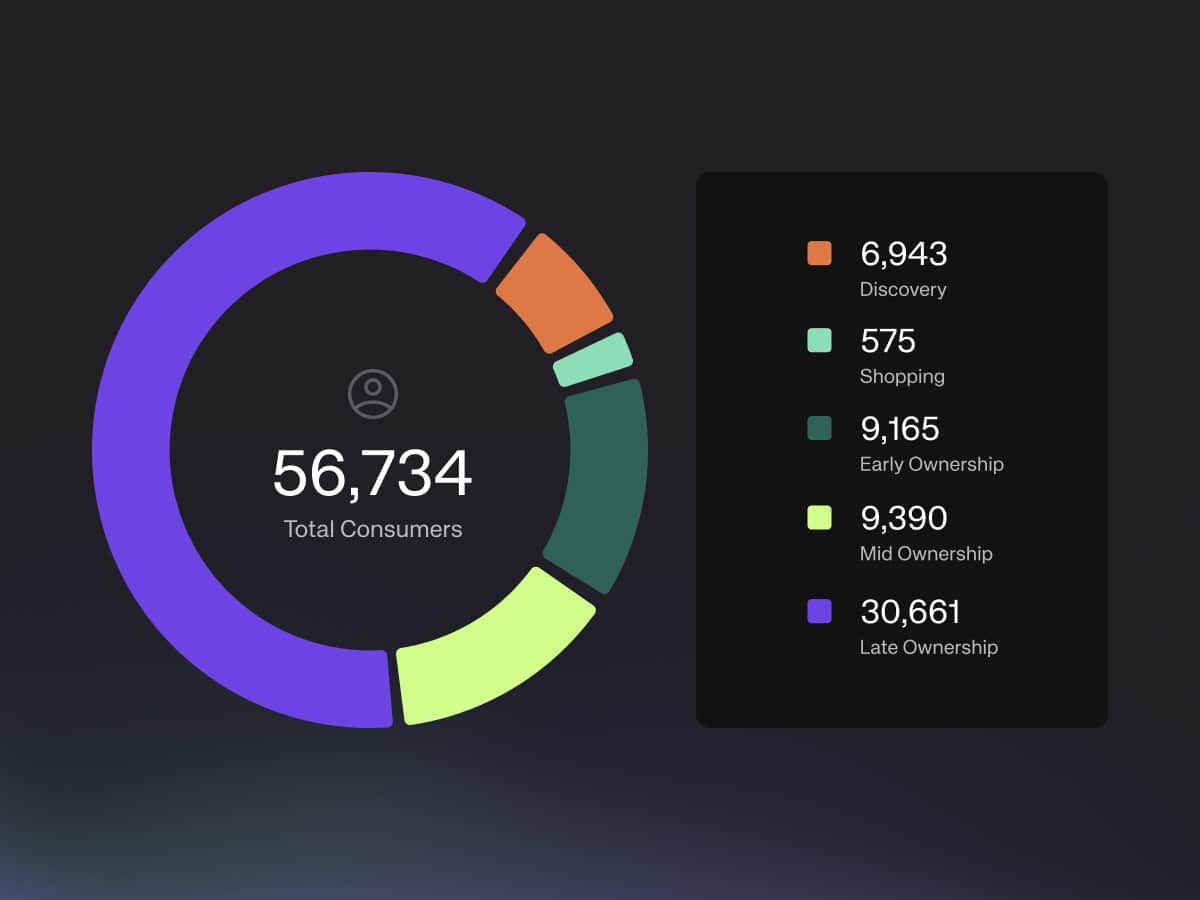
Marketing AI came with the Outsell purchase. It builds campaigns by email and SMS, and by paper mail. It segments the base, cleans DMS records and shows who is ready to buy.
The company gives three numbers. Return sales to the same dealer up 35%, service repair orders up 41%, gross profit up 36%. Again, company claims.
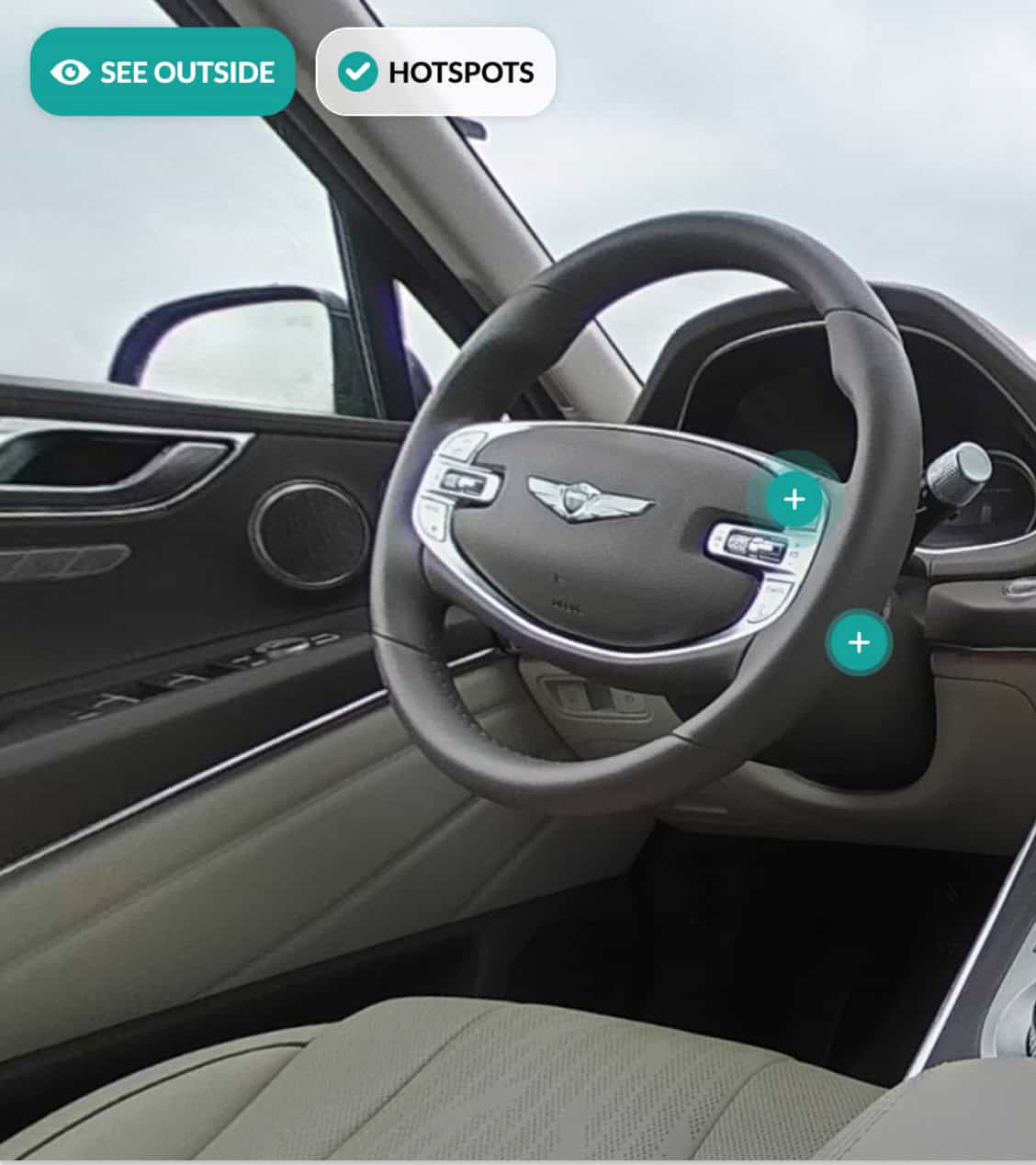
Merchandising AI is the legacy of SpinCar. It offers 360 walkarounds, feature tours, video and photo improvement for the vehicle page. The company started here.
The page includes a study with Cars.com. The company says it studied more than one million visits across 400+ dealers in 60 days. Listings with a 360 view showed more low-funnel actions than photo-only listings, it says. Impel ran the study with the marketplace. I do not count it as independent.
How the AI talks to a customer
On the AI Conversation Examples page the company shows nine conversations. They are grouped by theme. Inventory match, emotional intelligence, dealership policies, human plus AI, service. I read all the headlines and looked at three dialogs as images. They show three things.
First, the AI knows the exact build the customer wants and what is in stock. If the car is gone, it offers two or three alternatives and a visit time. In the Bronco example the car is still on its way. The AI states a 7 to 10 day wait and offers a deposit.
Second, the AI reacts to doubt. In one example the customer writes that the monthly payment may be a stretch. The AI offers a lower trim and a certified pre-owned car. It keeps the appointment.

Third, the AI answers by the rules of a specific store. In the certified car example it names the price match guarantee, the truck APR and a free first oil change.
What is missing on the site? There is no example of a bad dialog. There is no example where the AI refused to answer and passed the chat to a human. There is no feed of real dialogs with dates. There is no case that follows one lead for one month or three.
The Sales AI page says the AI keeps a lead warm for months and changes its approach when the lead goes quiet. But I found no live chain on the site. Ask for one on the demo.
What dealers say
For a vendor this big, independent reviews are few. Here is what I found.
On DealerRefresh Impel has a 36% rating and a "Criticized" label. The page shows 27 mentions, 4 positive and 7 negative. I found no long positive review from a working dealer. Reddit gave me nothing on Impel.
On G2 a search result shows 4.3 out of 5 from 14 reviews. But the page blocks robots, so I did not verify it.
Alex Snyder, a forum staff member, wrote in July 2024 in a thread. He said Impel's product is "super generic and takes so much labor to get going decently". He also called their sales team "the monster" that put the product into a huge number of stores.
A dealer in a thread about Carfax Advantage Dealer wrote that "layering solutions isn't ideal as it creates more admin for sales people". This is not about Impel alone. It is about this class of tools.
Dealer Rob wrote more sharply in December 2024 in another thread. He said Podium AI has potential. And "Impel AI should be taken behind the shed". Here, Podium is a rival vendor.
In the same thread dealer Bill Vaughn described an AI vendor without naming it. The dialogs impress him, he wrote, but the bot joins the talk at the wrong time. The vendor refused to change scripts for his store. I mention it as a similar case, not as a fact about Impel.
There is an older story too. In 2018 a thread called BUSTED Spincar caught selling dealer data appeared. A dealer accused SpinCar of selling website visitor data to third parties. In 2021 the author added that he had met the team and no longer had his earlier fears. The topic came back in a thread about a hack of 6,600 dealer websites.
I found no lawsuits, leaks or public outages for Impel. But the question of who owns the data is worth asking in plain words.
My conclusion from the reviews. There are few, and they say one thing. Dealers see a generic template that needs a long time to tune. They say the vendor sells better than the product works. This is the view of a small sample, not a verdict.
What is confirmed and what is a company claim
| Confirmed independently | Company claim only |
|---|---|
| SpinCar start year, rename to Impel, founders (CBT News) | 8,000+ clients and 51 countries |
| The 104 million dollar round, the Outsell purchase for 100+ million (CBT News) | 11.4 billion dollars of revenue "influenced" by AI |
| FM Capital stake, December 2025 (Digital Dealer, press release) | All growth percentages on the module pages |
| Criticism and the 36% rating on DealerRefresh | All dealer case studies, including Etheridge Ford |
| The 2018 SpinCar data story and its softening in 2021 | Results of the Cars.com study |
| Dealer opinions on the forum (opinions, not measurements) | SOC 2 Type II certificate (on the site, I did not see the report) |
About the case studies. Etheridge Ford in Melbourne says the AI booked 27% of all showroom visits. It reports 99.7% satisfaction. The page gives no time period.
Central Maine Motors got 150+ visits and 3.2 million dollars of revenue in three months, says the Impel blog. The same store is in a Podium case study with a 14 to 1 return. Two vendors claim the result of one store.
This is not always a lie. Both tools may have worked. But this is how case studies look in this market.
The Sales AI page also has unnamed stories. One group had 90% higher conversion and 5 million dollars in savings. Walter's Auto Group cut days to sale by 56% across six luxury rooftops.
Capital grew BDC capacity 2.5 times across 20+ rooftops. A dealer named Daniel Kim reports a 99% contact rate. All of this is vendor material.
Price and terms
There is no price. The site has one path, "Book a Demo". On a forum a dealer estimated such add-ons (Hammer, Impel) at 1,500 to 3,000 dollars a month. This is one person's estimate, not a price list. The real price depends on the number of stores and modules, and on the integrations.
Impel sells through demos, its own strong sales team and car maker programs. Search results show announcements with Mitsubishi and Audi, and also with FordDirect and CDK. I did not check the terms of these programs.
The site lists these integrations. CDK Global, Tekion, VinSolutions, DealerSocket, Xtime, vAuto, PBS Systems, ProMax, Dealer Inspire and DealerOn.
Questions to ask before you sign.
- Which CRM and DMS do you integrate with live at my store, and what do you write back (tasks, notes, statuses)?
- Who owns the customer data and the conversations? What happens to them after I end the contract? Do you use them to train a shared model?
- How long is the contract, how do I leave, and what does leaving cost?
- Which scenarios can I change myself, and which need a ticket? How long does a ticket take?
- Who writes the knowledge bank, and how fast does it update after a new offer?
- When does the AI join a conversation, and when does it stay out? Can I set rules by time, lead source and stage?
- Show me the hand-off to a human inside my CRM, on a live store.
- Give me two dealers of my size and brand. I will talk to them without you.
- How do you count results? What is an "AI-booked visit", and who checks it?
What you can take without buying
Impel sells order, not a bot. You can build that order from what you already have.
- Name one owner of the customer, from the first lead to the third service visit. Not four departments with four databases. One name per customer.
- Count your missed service calls for one week. Your phone system has a report. Multiply by your average repair order. If the number hurts, you found the cheapest money in the store.
- Write a one-page knowledge bank. Loan terms, offers, warranties and answers to the five most common questions. A new rep needs it as much as an AI does.
- Add a hand-off card for leads. Three lines. What the customer wants, what you already told them, what the next step is. Impel shows this in its picture, and you do not need AI to do it.
- Write the service chain. 30 days after purchase, first service, next service, warranty end, declined repair. Decide the author, the timing and the text.
- Review the last ten conversations of your BDC for timing. When did you write to the customer, and why? Was it the wrong moment? This is the main question for any AI, and you should be able to answer it about people first.
Verdict from the materials. It fits a dealer group with a process, not a single store
By the materials, Impel fits a large dealer group with several stores. The group needs its own CRM or DMS from the integration list. Its BDC should be expensive and split across stores. And it needs a person who is ready to tune scenarios for months. The product aims at groups, and the loudest cases are about groups with 16 to 20+ rooftops.
It does not fit a single store that expects "plug in and it works". Dealers on the forum describe the opposite. They talk about a template and a lot of work.
It does not fit anyone without a clear process. AI does not create a process. It speeds up the one you have.
Before you buy, I would do one thing. Ask for a demo on a live store of your size. Ask them to show a bad dialog, not the best one.
Videos worth watching
- Raising $130 Million to Build the Future of Automotive Retailing AI. Car Dealership Guy channel, 42 minutes. A long interview with Devin Daly about the path from SpinCar to AI and about the funding round.
- The Real AI Goldmine for Automotive Dealers. Impel channel, 43 minutes. Art Dessain, vice president of sales, says the money is not in the CRM but in the DMS.
- Live Replay NADA Show 2024. Devin Daly. CBT News, 7 minutes. A short interview with the CEO at the NADA show.
The company or friendly channels made these videos. Watch them as the vendor's position.
Read next
- Oct 10, 2026
NewsHow to work with AI, October 10. Five habits: read from a bookmark and confirm before sendingFive tips from Anthropic and Simon Willison in simple words. How to avoid losing leads in an agent report, not mistake a failure for a quiet day, check status before sending and not let an agent submit forms without your yes. For each tip I show how to use it in car sales.7 min - Oct 10, 2026
NewsWhat auto and AI leaders posted, October 10. Naming the price is easy, matching it is hardPosts and videos from the last day on X and YouTube. California's law puts the total price in the first written reply, Honda enters pickups through Mitsubishi, and Lemkin gives pitch review to an AI agent. My take on each post, with a link.6 min